← Library
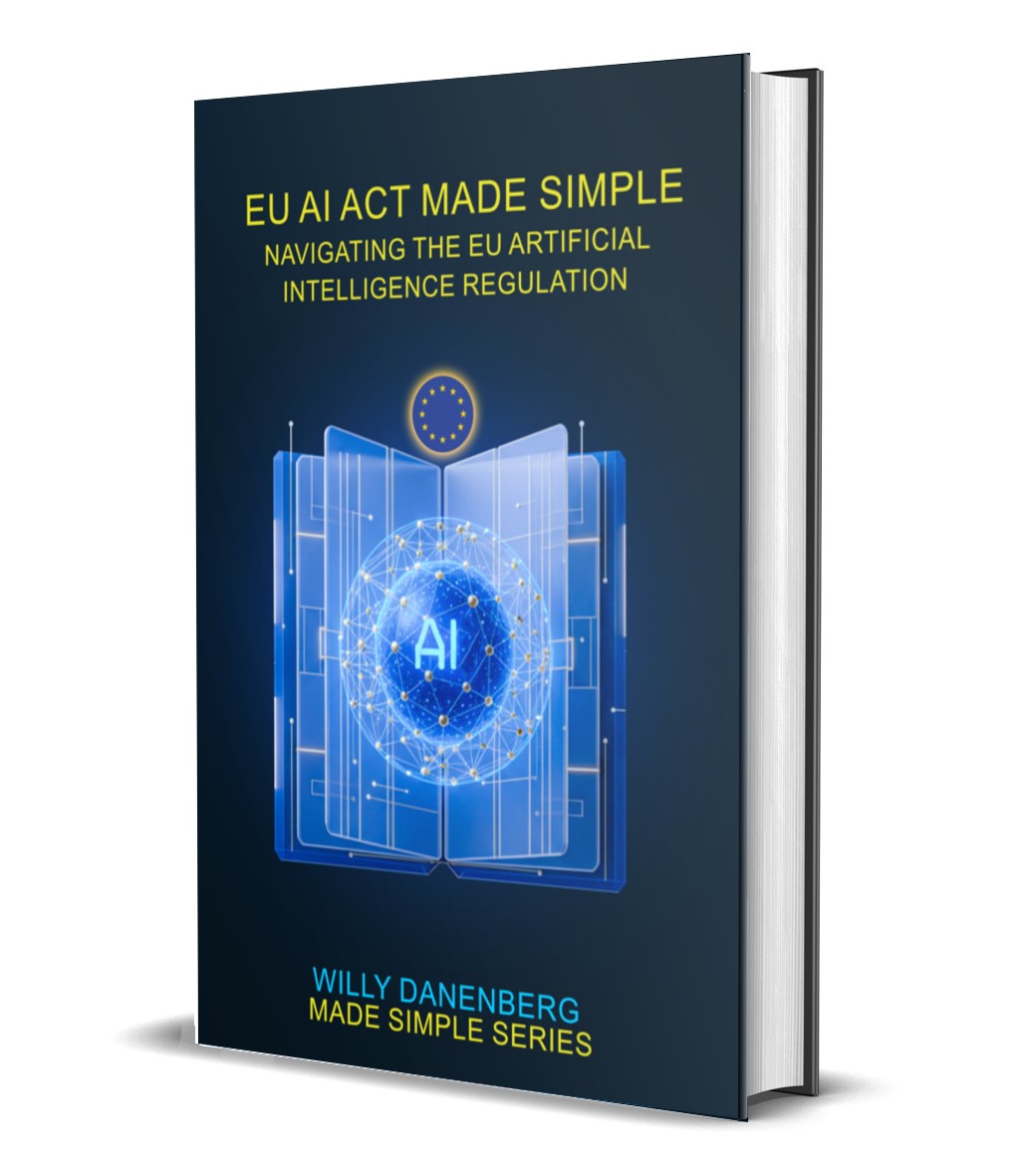
EU AI ACT Made Simple
Willy Danenberg
EU AI Act Series
Progress1/54
1
Introduction
🔒
What Readers Say
🔒
Trademark, Copyright, and Legal Disclaimers
🔒
Introduction
🔒
Chapter 1 - Artificial Intelligence Becomes Critical Infrastructure
🔒
Chapter 2 - The Regulatory Vacuum and Its Consequences
🔒
Chapter 3 - Why the European Union Chose a Binding Legal Framework
🔒
Chapter 4 - From GDPR to the EU AI Act
🔒
Chapter 5 - Why the EU AI Act Matters Globally
🔒
Chapter 6 - The Risk-Based Approach Explained
🔒
Chapter 7 - Prohibited AI Practices
🔒
Chapter 8 - High-Risk AI Systems
🔒
Chapter 9 - Limited-Risk and Minimal-Risk AI Systems
🔒
Chapter 10 - General-Purpose AI and Foundation Models
🔒
Chapter 11 - Providers, Deployers, Importers, and Distributors
🔒
Chapter 12 - Board-Level and Executive Accountability
🔒
Chapter 13 - Legal, Compliance, Risk, and Audit Functions
🔒
Chapter 14 - Software Developers and Data Scientists
🔒
Chapter 15 - DevOps, MLOps, and Platform Engineering
🔒
Chapter 16 - Risk Management Throughout the AI Lifecycle
🔒
Chapter 17 - Data Governance, Training Data, and Bias
🔒
Chapter 18 - Technical Documentation and Traceability
🔒
Chapter 19 - Human Oversight and Control Mechanisms
🔒
Chapter 20 - Transparency, Explainability, and User Communication
🔒
Chapter 21 - AI Systems as Cybersecurity Assets and Targets
🔒
Chapter 22 - Incident Management, Monitoring, and Resilience
🔒
Chapter 23 - The EU AI Act and GDPR
🔒
Chapter 24 - The EU AI Act, NIS2, DORA, ISO 27001, and Cybersecurity Frameworks
🔒
Chapter 25 - Audits, Supervision, and Enforcement Under the EU AI Act
🔒
Chapter 26 - Preparing the Organization for the EU AI Act
🔒
Chapter 27 - Sustaining Compliance and Continuous Improvement
🔒
Chapter 28 - Why Preparing for the EU AI Act Matters
🔒
Chapter 29 - Making the EU AI Act Truly Simple
🔒
Chapter 30 – The EU AI Act as a Long-Term Strategic Reality
🔒
Annexes
🔒
Why Audits Are Inevitable Under the EU AI Act
🔒
Audit Versus Enforcement
🔒
What Authorities Actually Look For
🔒
Documentation as the First Line of Defense
🔒
Traceability as an Audit Accelerator
🔒
Common Audit Triggers
🔒
Responding to Information Requests
🔒
Demonstrations and Technical Explanations
🔒
Internal Mock Audits
🔒
The Role of Internal Audit and Compliance Functions
🔒
Managing Inconsistencies
🔒
Cross-Border and Multi-Authority Coordination
🔒
Audit Stress and Organizational Behavior
🔒
Why Audit Readiness Improves Operations
🔒
Regulators as Stakeholders, Not Enemies
🔒
Closing Perspective on Audit Readiness
🔒
Annex J - Organizational Roles, Responsibilities, and Governance Models
🔒
Annex L - Enforcement, Fines, and Realistic Exposure Analysis
🔒
Annex M - A Practical Readiness Roadmap for Organizations
1 / 54
Introduction
About this book
EU AI ACT Made Simple
by Willy Danenberg
EU AI Act Series
54 chapters
AI Governance & Compliance
EUR 14.95
Also in this series

Understanding, Implementing, and Governing Artificial Intelligence Under the New European Regulation
Willy DANENBERG